


Mnemorec-2016 © All Rights Reserved. Privacy Policy | Terms of Use
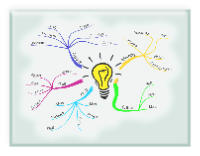



Memory may be divided into short-term (also known as working or recent memory) and long-term memory. Short-term memory recovers memories of recent events, while long-term memory is concerned with recalling the more distant past.


Implicit memory:
Memory characterized by a lack of conscious awareness in the act of recollection. By contrast, explicit memory requires conscious recollection of previous experience.
Implicit memory may survive largely unimpaired at the same time as a person's powers of explicit memory decline with age or are devastated in Alzheimer disease.
Explicit memory:
Memory in which there is a need for conscious recollection in order to recall something. By contrast, in implicit memory there is a lack of conscious awareness in the act of recollection.
Implicit memory may survive largely unimpaired at the same time as a person's powers of explicit memory decline with age or are devastated in Alzheimer disease.
Some disorders, such as Alzheimer's disease, damage the cognitive systems that control memory. Usually long-term memory is retained while short-term memory is lost; conversely, memories may become jumbled, leading to mistakes in recognizing people or places that should be familiar.
What’s normal forgetfulness..
? Forgetting what you went upstairs for.
? Taking several minutes to recall where you left the car.
? Putting things down and being unable to find them soon after.
? Forgetting something trivial a friend mentioned to you the day before.
? Forgetting the name of someone you’ve just met.
? Briefly forgetting the name for something –the ‘thingumabob’ moment.
Our short-term memory is very distractible.
The brain literally erases trivial information to make room for more important information that needs storing.
And what’s cause for concern...
? Multi-tasking becomes difficult – an able cook suddenly finds preparing a Sunday roast overwhelming.
? Problems negotiating familiar places, such as regularly not being able to find your car.
? Forgetting the names of close friends and relatives.
? Problems recognising faces, colours, shapes and words.
? Repeating a question asked half an hour previously.
Many of these symptoms could be attributed to depression, grief, stress or lack of sleep. But they could be early signs of dementia.
However, say experts, if you’re aware of your memory problems, this is unlikely.